a minnesota school board banned a sticker the size of a business card. two families are suing.
via MPR News, the Detroit Lakes Tribune and the ACLU of Minnesota.
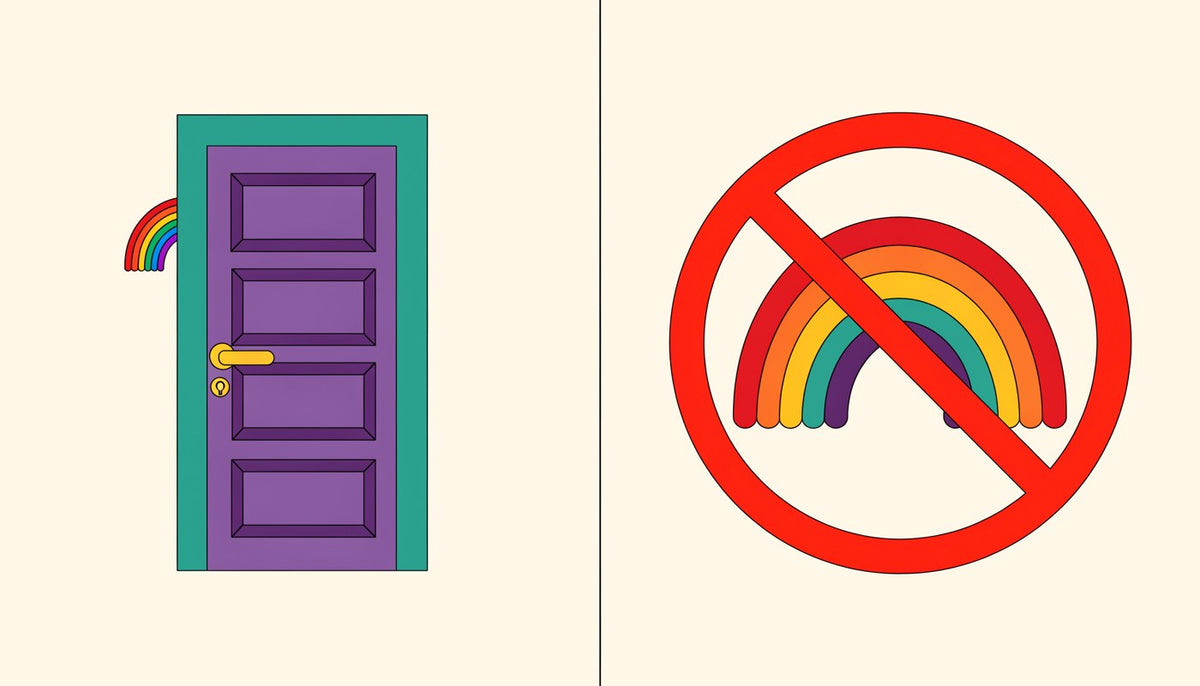
Two inches by three. That is the size of the rainbow stickers some teachers in Detroit Lakes, Minnesota, have put up by their classroom doors for years, a small signal to LGBTQ students that the room was safe. On July 27 the school board voted 4 to 2 to ban them.
The resolution, as the ACLU of Minnesota quotes it, covers "any rainbow stickers, posters, flags, buttons, etc." in district buildings. The Detroit Lakes Tribune names the four yes votes as John Steffl, Michelle Okeson, Michael Walther and Sanford Nelson. According to the ACLU, the resolution was not on the posted agenda, so nobody in the community knew it was coming until it had passed.
what the rainbow ban lawsuit claims
On Tuesday the ACLU and the firm Lockridge Grindal Nauen filed suit in Becker County District Court on behalf of two students, through their mothers, against the district and the four board members. The complaint says the ban violates students' free speech and equal protection rights under the Minnesota Constitution, amounts to discrimination and harassment under the Minnesota Human Rights Act, and was adopted in breach of the state's Open Meeting Law. One of the students, MPR reports, is president of the Detroit Lakes Queer Community.
"We filed this lawsuit because the Rainbow Ban casts a pall over the entire Detroit Lakes School District, chilling speech in support of LGBTQ+ students," Catherine Ahlin-Halverson, the ACLU-MN's deputy legal director, said in the release. To MPR she put it more simply: "There's a chilling effect, because students are aware that this is happening."
how the district answered
Superintendent Mark Jenson told MPR the administration has not "directed the removal of any materials from schools" while the board works on policy, even though the ACLU says the resolution ordered their immediate removal. Nelson, who introduced it, told MPR the board needs to "move us forward with the July resolution" and that a new policy "will meet the legal muster."
So the district's position is, roughly, that it banned the stickers, has not taken them down, and is writing a policy to make the ban hold up. A sticker smaller than a phone has now produced a school board resolution, a superintendent's clarification, a state-court lawsuit and an MPR story. For a thing the board says does not matter, it is doing a lot of work.